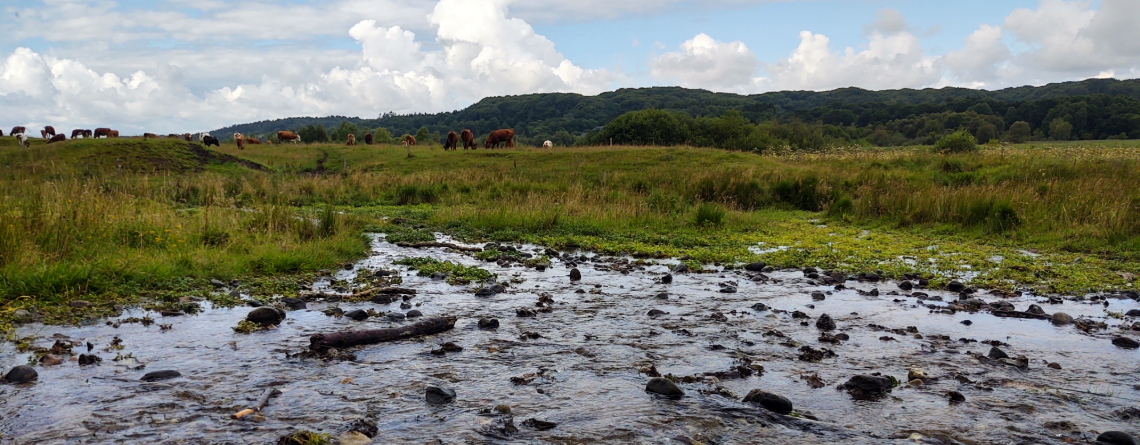
Ravnkilde in Rold Skov is pure spiritual wellness, and has drawn both witches and locals for centuries. Read more about the unique and sacred marsh spring here.
Parking:On Rebildvej, near Lars Kjærs Hus.
About Ravnkilde
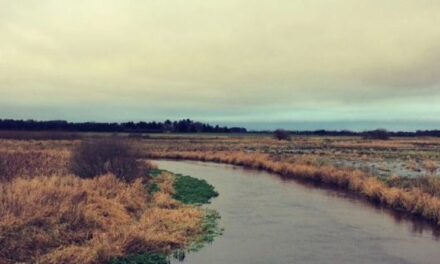
Ravnkilde (‘The Raven Spring’) is a so-called spring fen or marsh spring, characterized by water welling up through the ground and creating a wet and lush area with cushions of moss and a wealth of rare plant species, and water with a constant temperature of approximately 7 degrees Celsius, discharging about 85 litres of water per second.
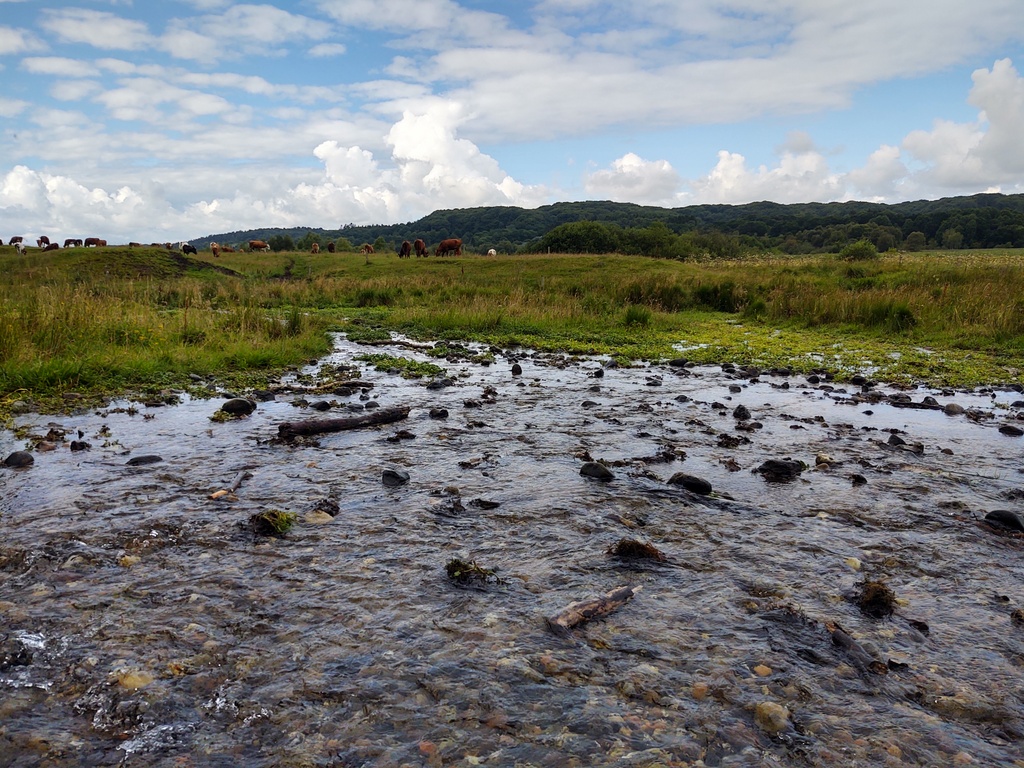
Ravnkilde in its idyllic surroundings (photo by Mikkel Houmøller)
The famous witch of Rold Forest, Dannie Druehyld, has said that she often collected her spring water here and used it for her witch’s remedies, and regarded the water, like the River Jordan and the Ganges, as sacred. Over time, Ravnkilde has had many functions, including as a healing spring and a fertility spring. If one bathed in the spring by moonlight, one would conceive a child (although, according to Dannie Druehyld, this also required a little participation from a male specimen). Its water has been regarded as healing, and one must say that the experience of the spring itself is pure spiritual wellness. It has been home to valravens (possibly giving rise to the name), and to male water spirits (nøkker) and nymphs, which have inspired musicians to compose through the spring’s delightful babbling.
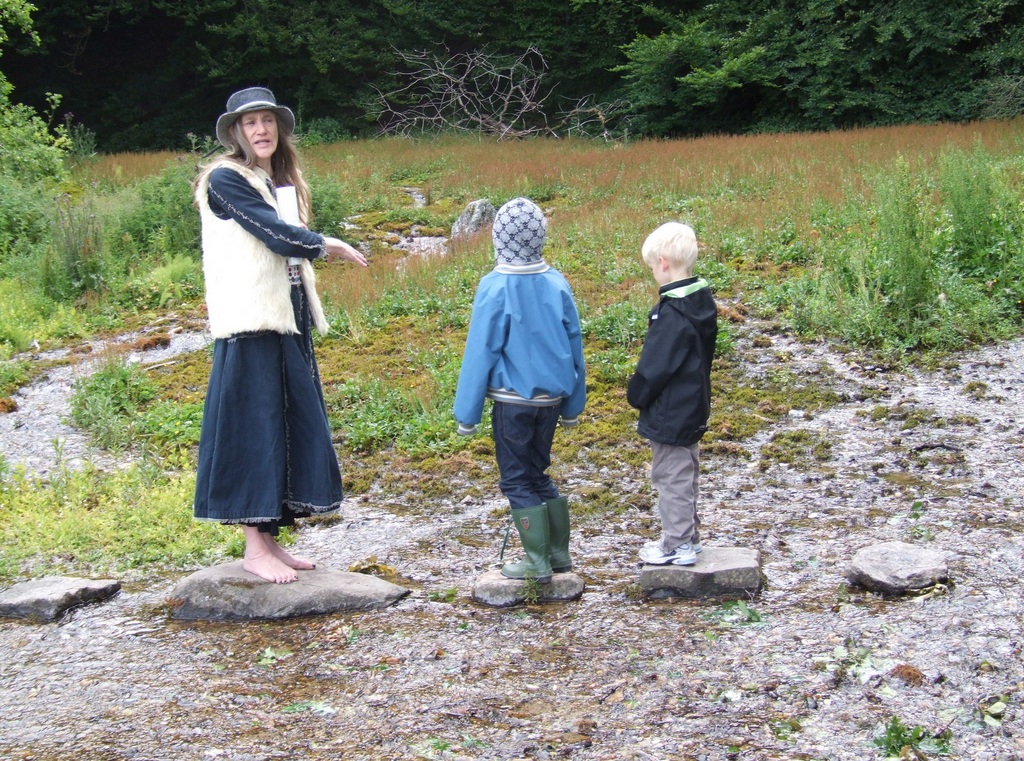
Dannie Druehyld (1947–2021) giving the next generation a tour around Ravnkilde.
Getting there
From the car park on Rebildvej, follow the path to the right. Along the way, you pass the poacher Lars Kjær’s house and walk along the gravel road with the heath landscape of the Rebild Hills on your right and the magnificent Gravlev River Valley with the restored Gravlev Lake on your left. On warm days, you can often sense the presence of the spring through a coolness in the air, even from a considerable distance. When you reach the spring, a unique type of nature opens up, where beech trees surround the spring, whose source reaches all the way up to the bank where the forest begins. A series of stepping stones provides access to the flowing water, and here you may safely take your water bottle and fill it, or drink directly from the spring’s, according to tradition, healing water. However, you must not step on the vegetation of the spring itself.
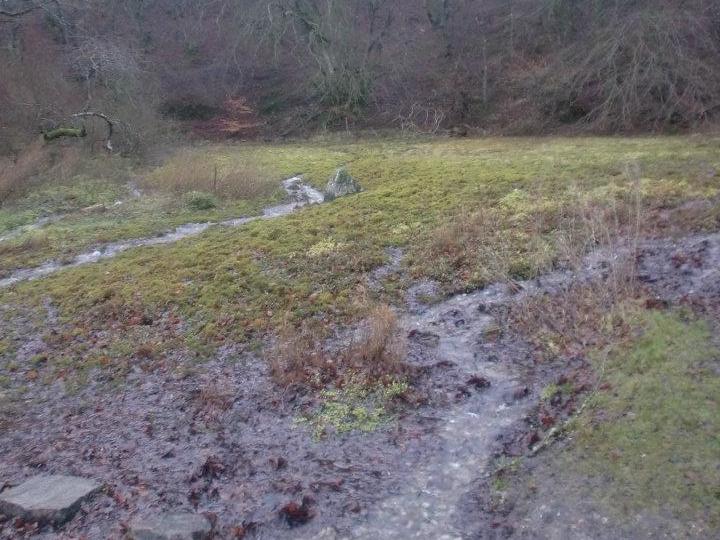
A few of Ravnkilde spring’s many branches.
If you continue from Ravnkilde along the road to the north, you can visit another spring, Lille Blåkilde (‘Little Blue Spring’), which, despite its name, is more white than blue because of the large quantities of lime it carries from the underground, and even larger than both Ravnkilde and Store Blåkilde (‘Greater Blue Spring’), with its 150 litres of water per second. From here, the spring contributes to the great Lindenborg River, which has its outlet in the Limfjord.
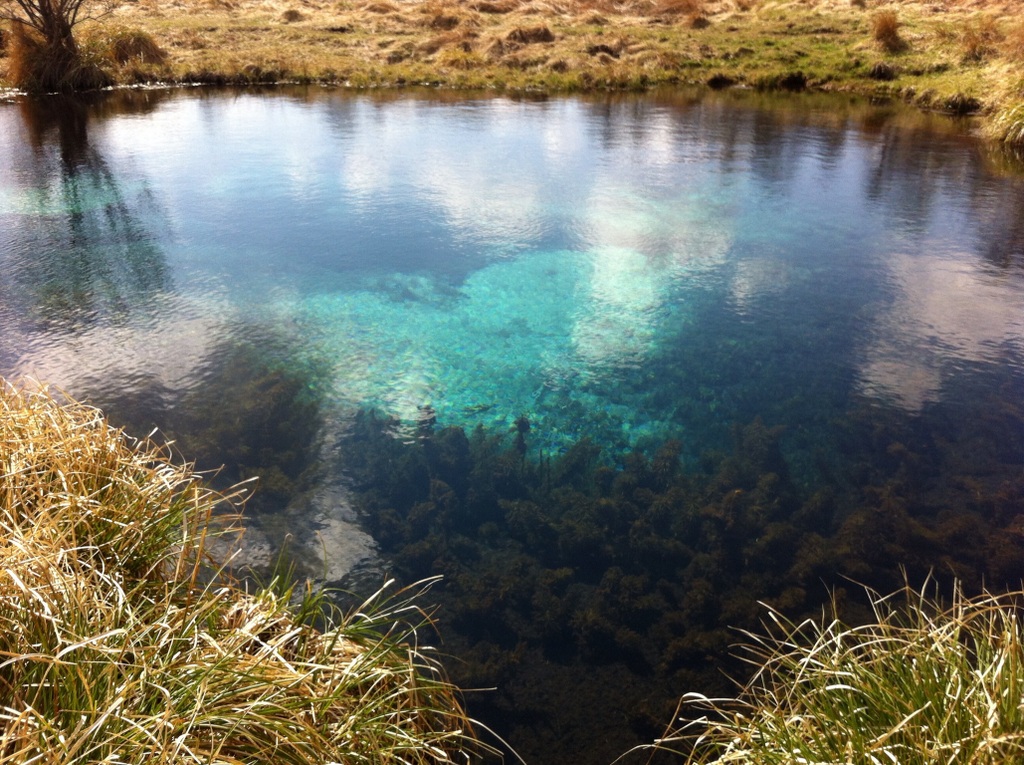
Store Blåkilde med dens safirblå vand.
Kilder
- Helge Qvistorff — Min yndlingstur i Rold Skov (Jysk Lokalhistorisk Forlag, 1999)
- Rebildporten