Flowing from the springs of Rold Forest in the heart of Himmerland to the Limfjord, Lindenborg Å carries tales of both ghosts and natural forces in its current
GPS Link: The halt:56.918255, 10.066884, Lindenborg Castle: 56.907783, 10.034607
Parking:Between Vaarst Engvej 15 and 20, a footpath provides access to the old railway embankment leading down to the bridge, approximately at 56.925650, 10.055747. Unfortunately, there is no official parking area here. Alternatively, you can park at Vaarst Banevej and walk to the railway bridge, a journey of about 30 minutes.
Good To Know: The former railway line has been converted into a cycling and walking path. From Vaarst, it is possible to cycle all the way to Hadsund, 30 km (19 miles) to the south, along a route that passes through beautiful and varied landscapes, historic buildings, ancient burial mounds, and more.
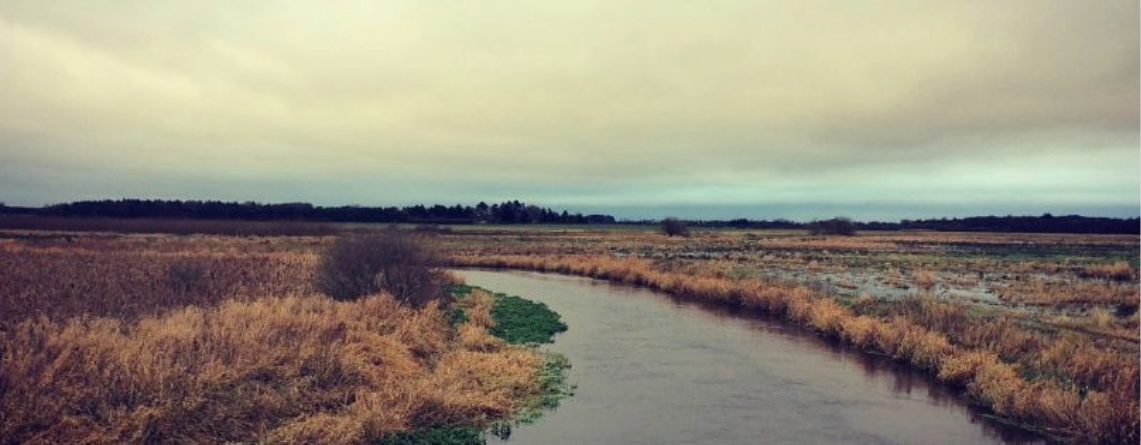
The Lindenborg River rises near the village of Nysum, south of Rold Forest, alongside its “twin,” the Simested River. Both rivers are approximately 50 kilometers long, but while the Simested River flows southwest into Hjarbæk Fjord, the Lindenborg River runs north through the Gravlev Valley before emptying into the Limfjord between Aalborg and Egense, near the town of Storvorde.
What makes the Lindenborg River truly remarkable are the magical volumes of spring water that flow into it from Kousbækken, Lille Blåkilde, and Blåhøl, but above all from the ancient holy spring, Ravnkilde, which wells up from beneath the ground below the Rebild Hills.
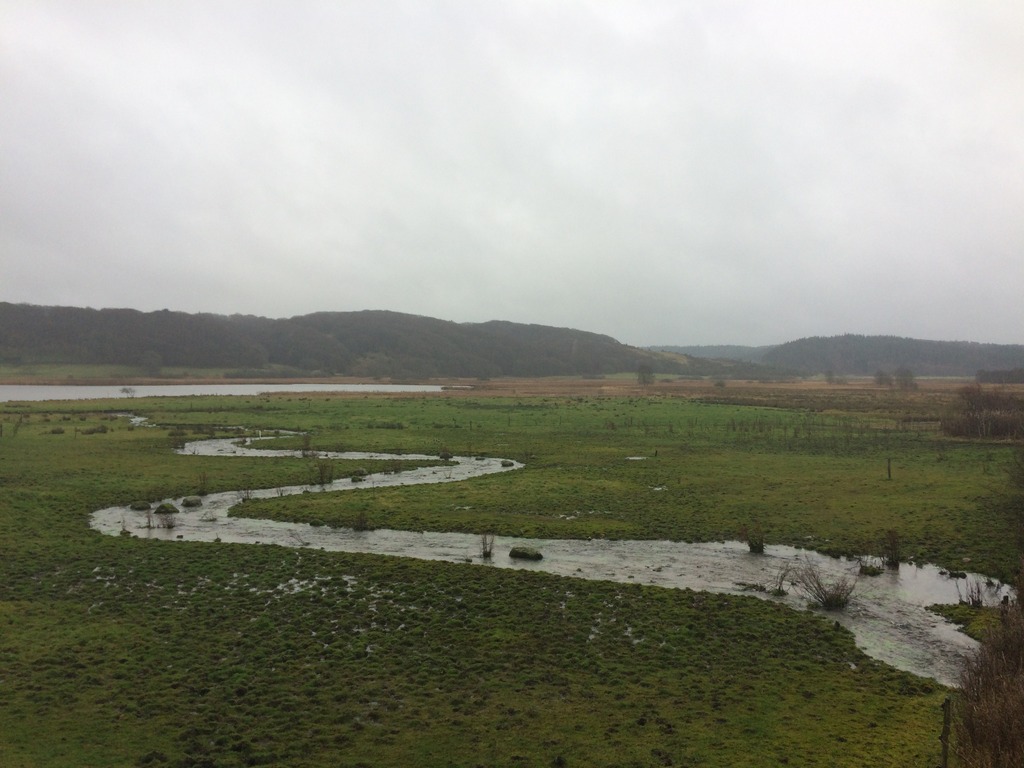
The Lindenborg River meanders through the Gravlev Valley
The Old Railway
Near the village of Vaarst, the former Aalborg–Hadsund railway crossed the Lindenborg River in the middle of the valley’s vast marshlands. The railway was closed in 1969. A water crane once stood here, supplying steam locomotives with fresh water during their journey. In 1928, a small railway halt was established by the river, allowing anglers to disembark with their fishing gear.
The nickname “Denmark’s most desolate railway halt” is well deserved. The bridge over the Lindenborg River lies deep within the broad, marshy valley, where drainage ditches struggle to keep the surrounding fields dry. If a solitary angler became absorbed in the pursuit of the river’s tempting pike, wandered absent-mindedly along its winding course, and missed the day’s last train, the night spent in the valley must have been a cold and lonely experience. Even on summer nights, the marshes produce a thick blanket of cold mist.
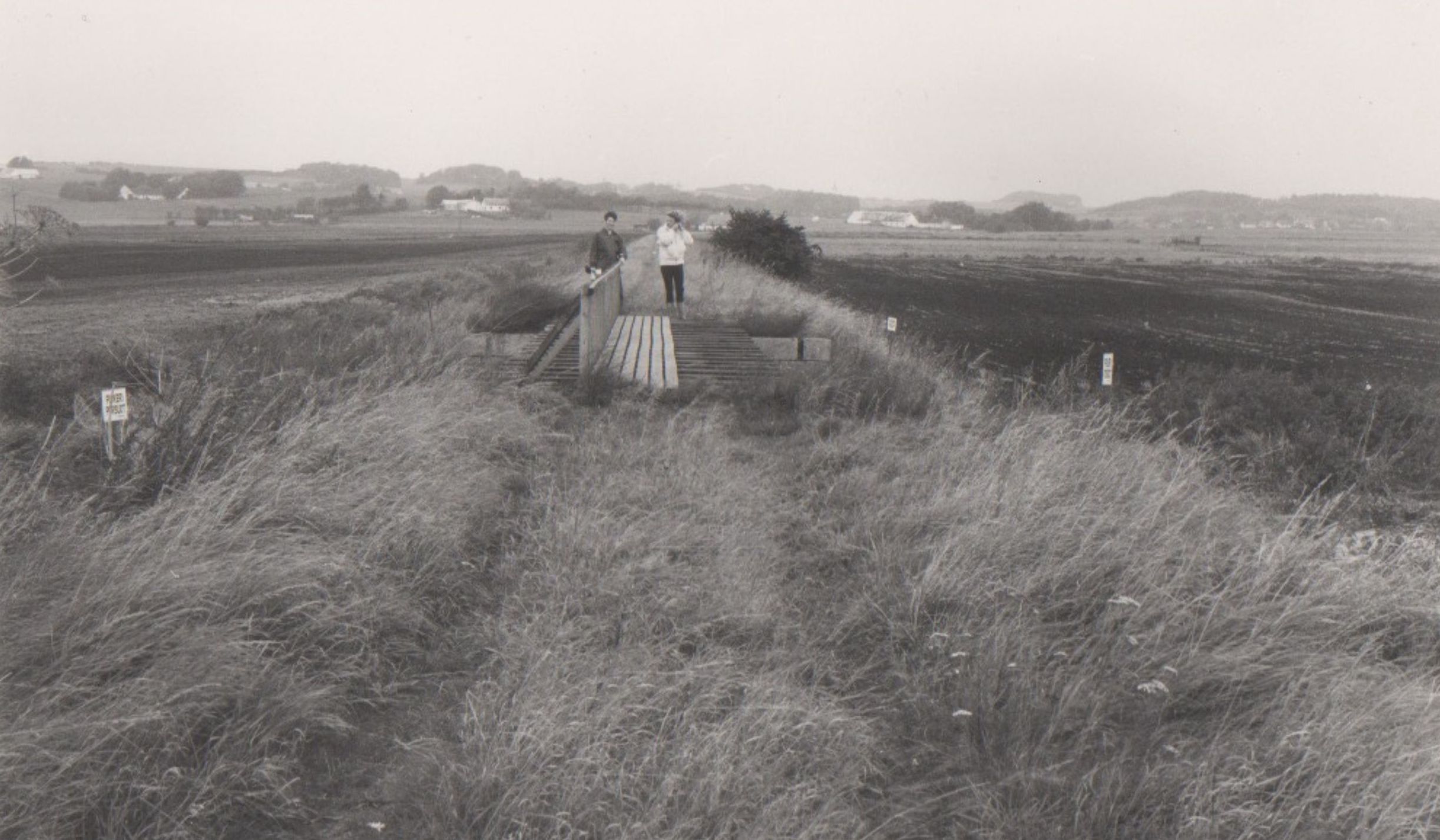
The author and her father at Denmark’s most desolate railway halt, back in the late 80s
The Haunted Castle
Not far from the former railway halt stands Lindenborg Castle — actually an old manor — whose origins date back to 1367. The original buildings were destroyed during the Count’s Feud in 1534, while the present main building was completed in 1567.
Several ghost stories and legends of maidens walled alive are associated with Lindenborg Castle, but the most famous concerns Baroness Sophie Amalie Lindenov, whose name has become inseparable from the estate’s hauntings.
According to one version of the legend, she orchestrated the murder of her husband, Claus Olufsøn Daa. Tormented by guilt, she is said to wander the manor restlessly at night, appearing as the Grey Lady.
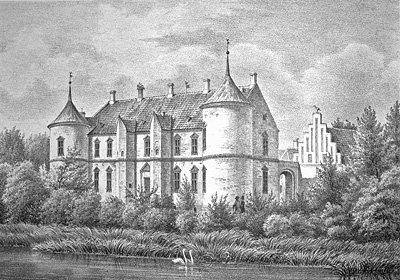
View of Lindenborg Castle, from an old illustration
The Final Journey of Sophie Amalie
Another, far more tragic story involving Sophie Amalie is from 1688, when she had to be rushed to Aalborg after a difficult labour threatened both her life and that of her unborn child. She was in such agony that she could not endure the jolting of a carriage. Instead, a leather sheet was stretched between four calm and powerful horses to create a makeshift litter, while musicians accompanied the procession in an attempt to drown out her cries.Sadly, Sophie Amalie did not survive the complicated childbirth. She and her child were buried in Blenstrup Church, south of the estate.
Local tradition says that on July nights, the eerie procession can still be heard travelling across roads that no longer exist in the countryside to the north. If there is a peaceful place from which to listen, the old railway bridge at Vaarst is an excellent choice. Far removed from the traffic of the Hadsund Road, visitors can experience the broad river, the silent marshes, and the solitude of the valley.
If you fail to hear the ghostly echoes of Sophie Amalie’s last journey, listen instead for the calls of ravens, nightjars, short-eared owls, and long-eared owls—or, with a little luck, perhaps even catch a glimpse of dancing elves or the mysterious will‑o’-the-wisps that are said to wander the marshes.

Portrait of Lady Sophie Amalie Lindenov (1649 – 1688)